
SNOOKER CUE · CONTROLLED COMPARISON
How to Compare Two Snooker Cues: A Controlled A–B Test
Keep the table, shot order and observation language stable so the comparison describes two exact cues—not two different practice sessions.
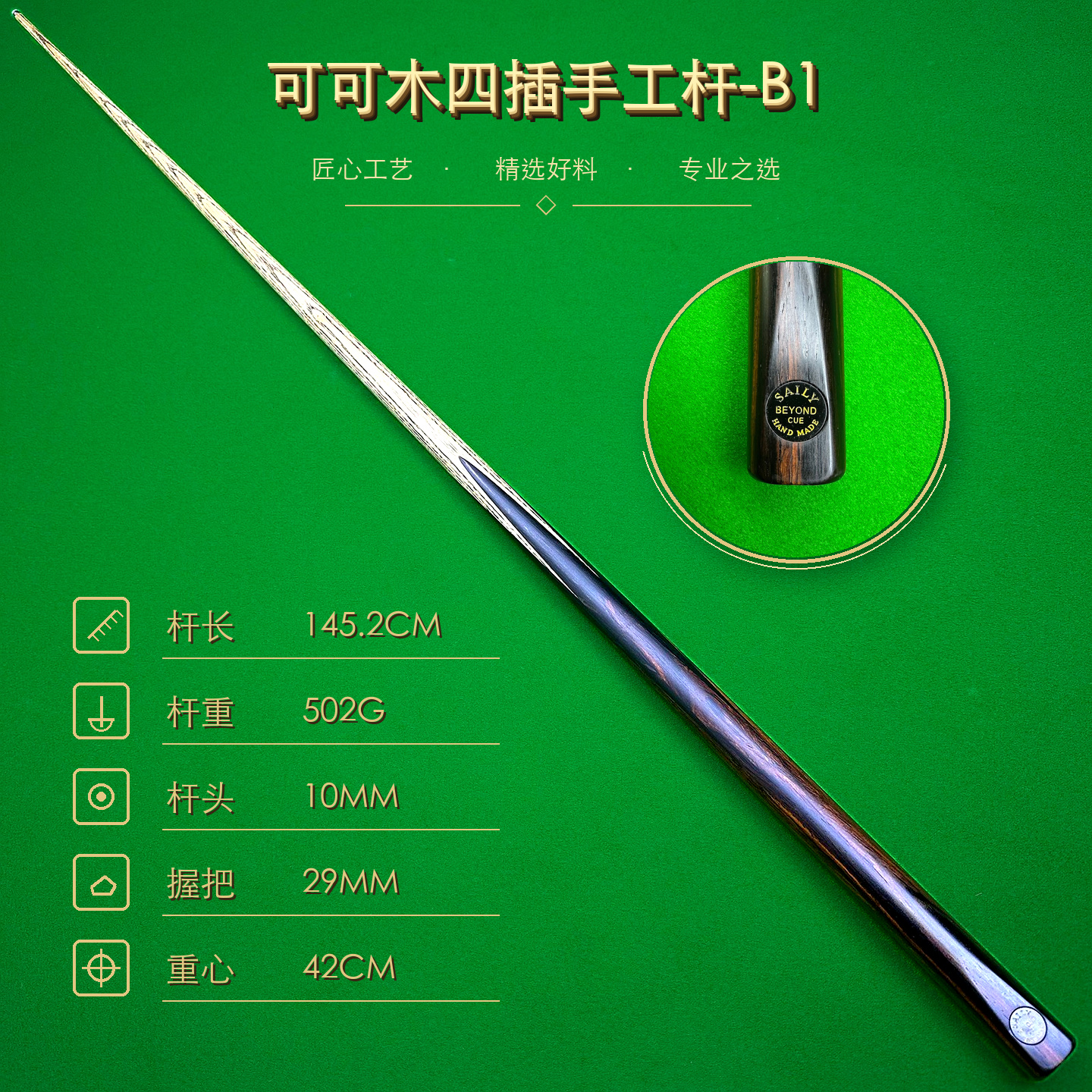
Short answer: identify the two exact cues, compare equivalent specifications and current condition, then alternate them through the same short shot blocks. Record setup, cue freedom, intended contact, speed response and result separately. Repeat the test before deciding, because one good clearance, one miss or one attractive specification cannot rank cue quality.
1. Make sure you are comparing two exact cue records
Write “Cue A” and “Cue B” at the top of a simple page, then attach an individual reference or a clear description to each. Include whether the cue is one-piece or jointed and list the assembled length, complete playing weight, installed tip size, butt-diameter reference and balance point when those measurements are available. Keep the original units and note how each value was measured.
Remove hidden mismatches before comparing. A cue weighed with an extension cannot be compared directly with one weighed alone. A balance point measured from the butt is not the same record as an unlabelled distance. The snooker cue specification guide explains how to normalise those fields before they enter a comparison.
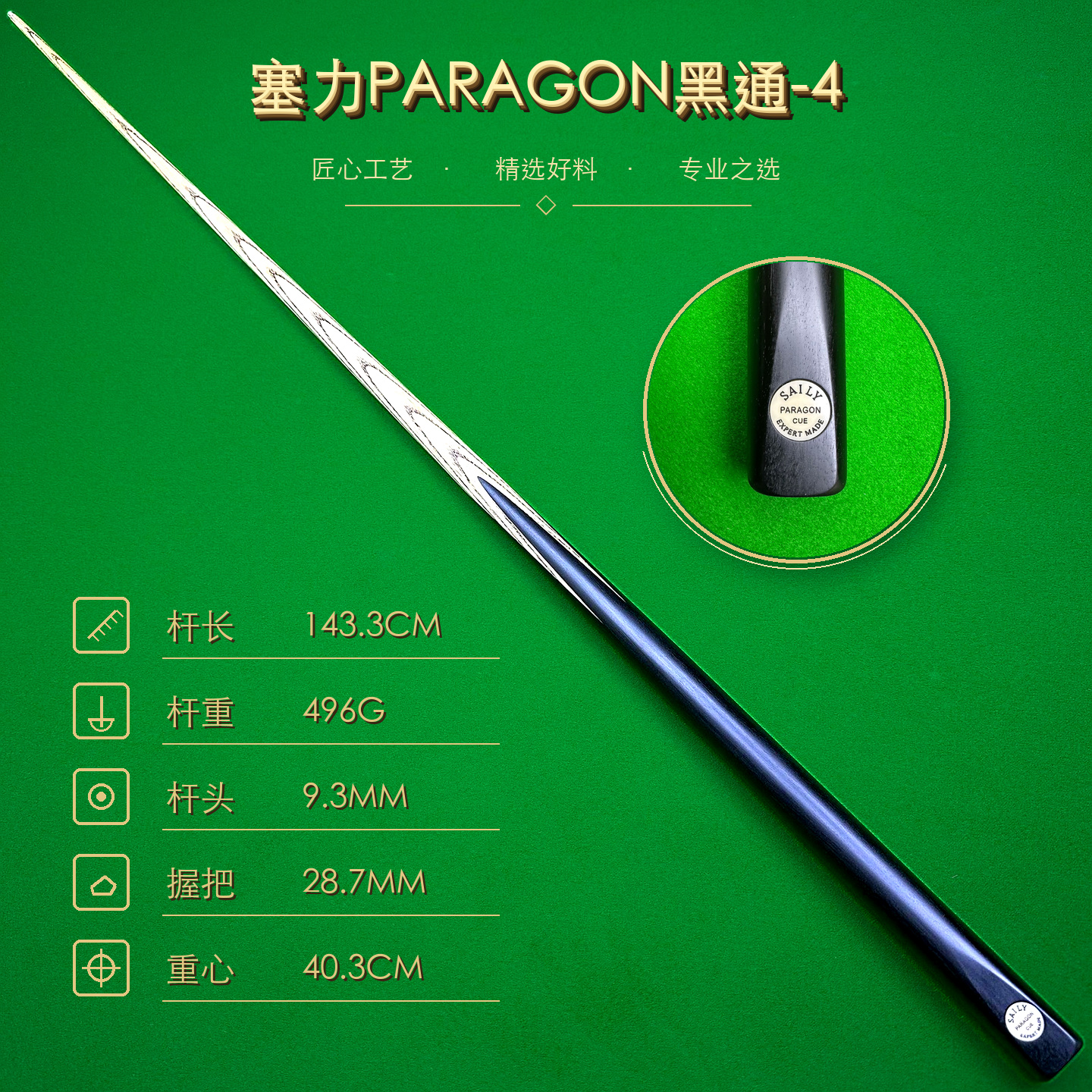
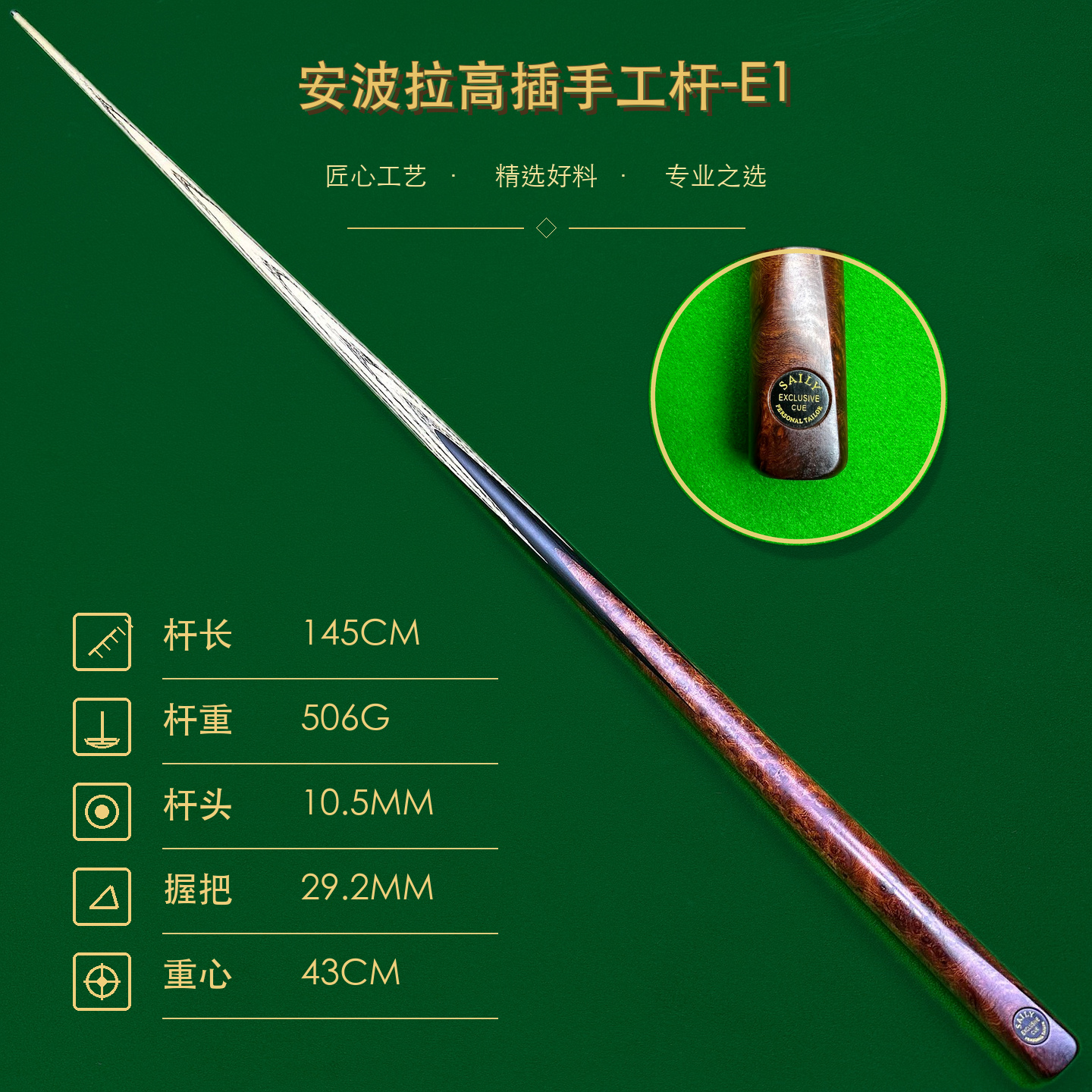
Use current photographs of the exact items. SAILY CUE product pages join an individual reference, real photographs and measurements in one record. A timber name, decorative style or model family cannot substitute for that evidence, and it does not predict which cue will suit a particular player.
2. Check condition before interpreting feel
Inspect both cues before chalking or playing. Look at the tip surface and edge, ferrule, visible shaft, joint faces, butt and finish. Assemble a jointed cue gently by hand and stop if the connection does not engage normally. A loose tip, visible crack, damaged joint or unexplained movement is a condition question, not a playing preference.
Do not sand, oil, polish, reshape or tighten a cue to make the test “fair.” Alteration changes the item and may hide the original evidence. If straightness is uncertain, use more than one observation and read the cue straightness screening guide; a single roll on an unknown surface is not a complete verdict.
Use comparable tips and cleanliness when practical, but record differences rather than pretending they do not exist. An older tip and a newly fitted tip introduce another variable. The honest conclusion may be that the cues cannot yet be isolated from their present condition.
3. Build a short controlled A–B test
Warm up with your familiar cue before the comparison. Choose three accessible tasks: a short straight pot, a longer straight delivery and a modest cut that you already understand. Add one gentle cue-ball speed exercise if space and table rules permit. Avoid extreme power, heavy side spin, awkward reach and unfamiliar safety shots in the first block; too many demands make the result difficult to interpret.
Use the same ball positions, table, cloth, lighting and approximate pace for Cue A and Cue B. Play a small block with A, pause, then repeat the same block with B. Rest between blocks and keep chalk, bridge length and pre-shot routine consistent. Avoid comparing a fresh first cue with a tired second cue under different conditions.
Never strike balls with a cue that has a suspected structural problem. Stop if the joint moves, the tip or ferrule appears loose, or the cue causes pain or requires a forced posture. A controlled comparison is useful only while both cues can be handled normally.
4. Record observations that explain the result
After each short block, score only a few items in plain language. Did your normal bridge and rear hand fit without crowding? Could you pause and feather without gripping harder? Did the cue travel freely past the chest and clothing? Was the intended tip contact easy to describe? Could you produce the planned slow, medium and firmer speeds without a last-second adjustment?
Record pots and misses, but do not let them erase the process notes. A ball can drop after an unintended contact, and a well-delivered ball can miss because the aim or speed choice was wrong. Small samples also exaggerate luck. Separate “setup felt repeatable,” “contact matched intention,” “speed matched intention” and “ball was potted” into different columns.
Compare descriptions rather than inventing precision. “Rear hand crowded on two of five entries” is more useful than “Cue B is 17% worse.” If the difference is only a general first impression, label it as such and repeat the block later.
5. Reverse the order and watch for fatigue
On the next comparable session, test Cue B before Cue A. This simple reversal helps reveal whether the second cue always suffers from fatigue, loss of concentration or changing table conditions. Keep the same shot list and stop at the planned endpoint rather than extending the session until one cue “wins.”
If one cue is your long-term familiar cue, expect a familiarity effect. That is relevant to an immediate buying decision, but it is not proof that the other cue is poorly made. A new length, butt diameter, weight or balance relationship may simply require an adaptation period. The weight versus balance-point guide helps you name physical differences without turning them into a performance ranking.
Repeat only when the question remains useful. Changing cues after every shot can disrupt the routine and make both cues feel strange. Short blocks preserve a stable setup while still giving each item more than one isolated attempt.
6. Compare an online cue with the one you know
An online buyer may not be able to play with Cue B. In that case, use your familiar cue as the measured reference. Record its complete playing configuration, then request the same fields and current photographs for the cue being offered. Ask which accessories are included, whether the pictured cue is the exact item and whether measurements describe the assembled cue.
You can identify likely differences—more total mass, another length, a different butt diameter or a different measured balance location—but you cannot convert them into a guaranteed feel or result. Confirm availability, price, delivery scope and seller terms separately. Use the snooker cue selection guide to turn the comparison into specific fit questions before ordering.
7. Choose by repeatable fit, evidence and intended use
Review both sessions and circle patterns that appeared more than once. Give priority to a comfortable setup, free cue movement, understandable speed response and confidence that the item record matches the cue. Appearance, format and portability can also matter; write them as separate ownership preferences rather than pretending they were proven by the shot test.
A result can be “both are usable,” “more evidence is needed” or “this cue does not fit my current setup.” You do not need to manufacture a winner. No controlled test can guarantee future accuracy, durability or competitive results, but a traceable comparison is a better basis for a decision than one pot, one specification or a borrowed opinion.
Comparing snooker cues FAQ
How many shots should I use to compare two snooker cues?
There is no universal number. Use several short, matched blocks rather than one long session or one deciding shot. Stop before fatigue changes your setup, and repeat the same A–B sequence on another day when the choice is important.
Should I count pots when testing two cues?
You can record the result, but keep it separate from setup, intended tip contact, cue delivery, speed and comfort. A small pot count is noisy and does not prove that one cue is higher quality or permanently more suitable.
Can weight or balance point tell me which cue is better?
No. Weight and balance point describe different physical facts about a documented cue. Compare them with length, tip, butt, configuration and condition, then use a controlled playing check without turning any number into a quality score.
What if I cannot test an online cue before buying?
Build the comparison from current photographs, the exact cue reference, equivalent measurements, condition, included items and seller terms. Compare that record with a familiar cue, but treat the likely handling difference as a question rather than a guarantee.
SAILY CUE COLLECTION
Start with two complete cue records
Compare real photographs, individual references and measured specifications before deciding which exact cue belongs in your test.