
SNOOKER CUE CONDITION · BUTT-END CHECK
How to Check a Snooker Cue Butt Cap Before You Buy or Play
Identify the exact end fitting, document its condition and stop when movement or damage needs a professional assessment.
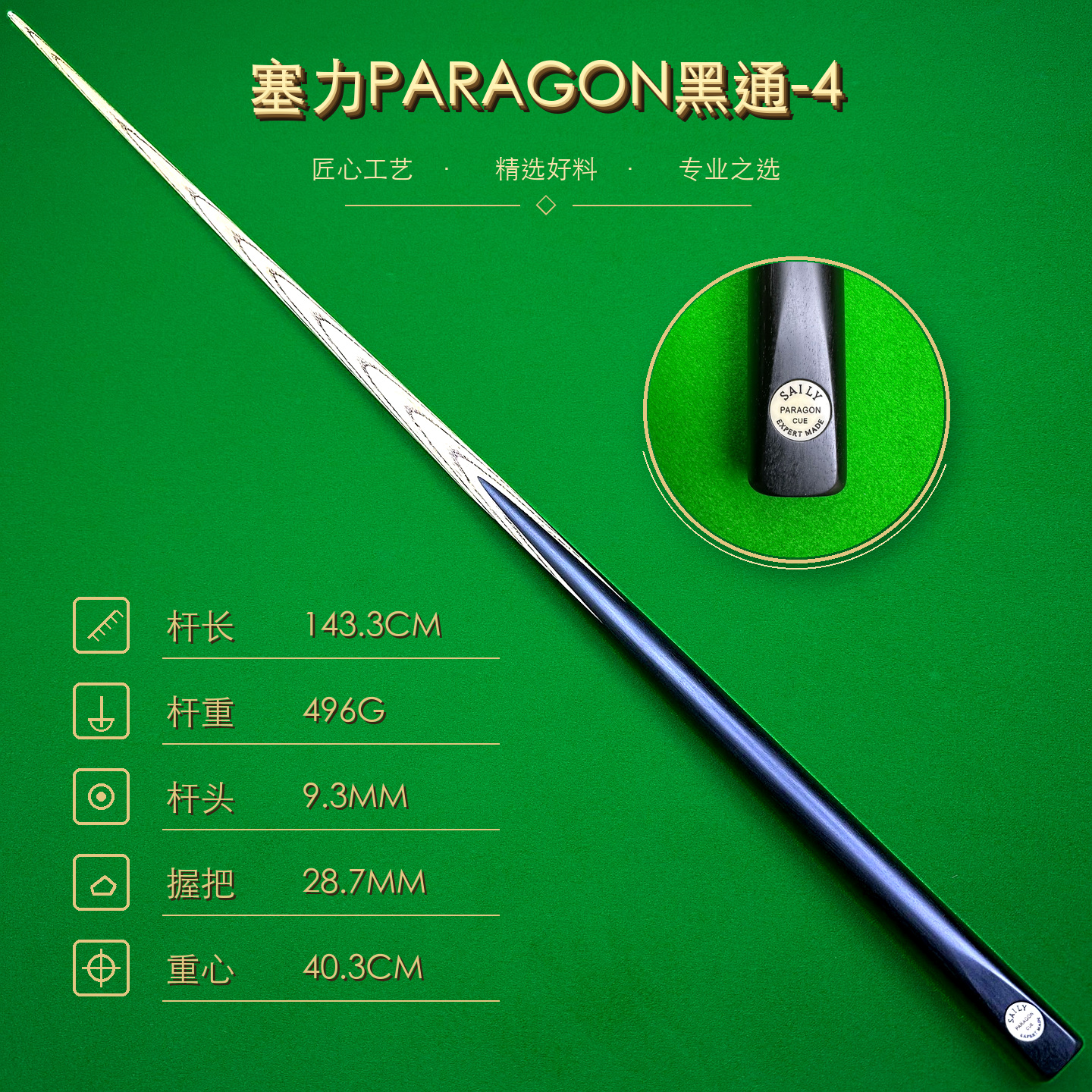
Short answer: to check a snooker cue butt cap, first identify what is actually fitted to the butt end, then photograph the exact cue and inspect the fitting, surrounding finish and contact area in even light. Look for a gap, looseness, chips, cracks, movement, rattling or a new pressure mark. Do not remove or modify the fitting to investigate it. Keep the cue out of play and ask the maker, seller or an experienced cue technician when the condition is unclear.
Identify the exact end fitting first
“Butt cap” is often used loosely. The end of a cue may show a bumper, badge, cap, plate, decorative end piece or a fitting intended to accept an extension. The visible part does not, by itself, prove what is underneath or how it is attached. The parts of a snooker cue guide explains the butt as a region of the cue, while the exact end treatment still belongs to the individual product record.
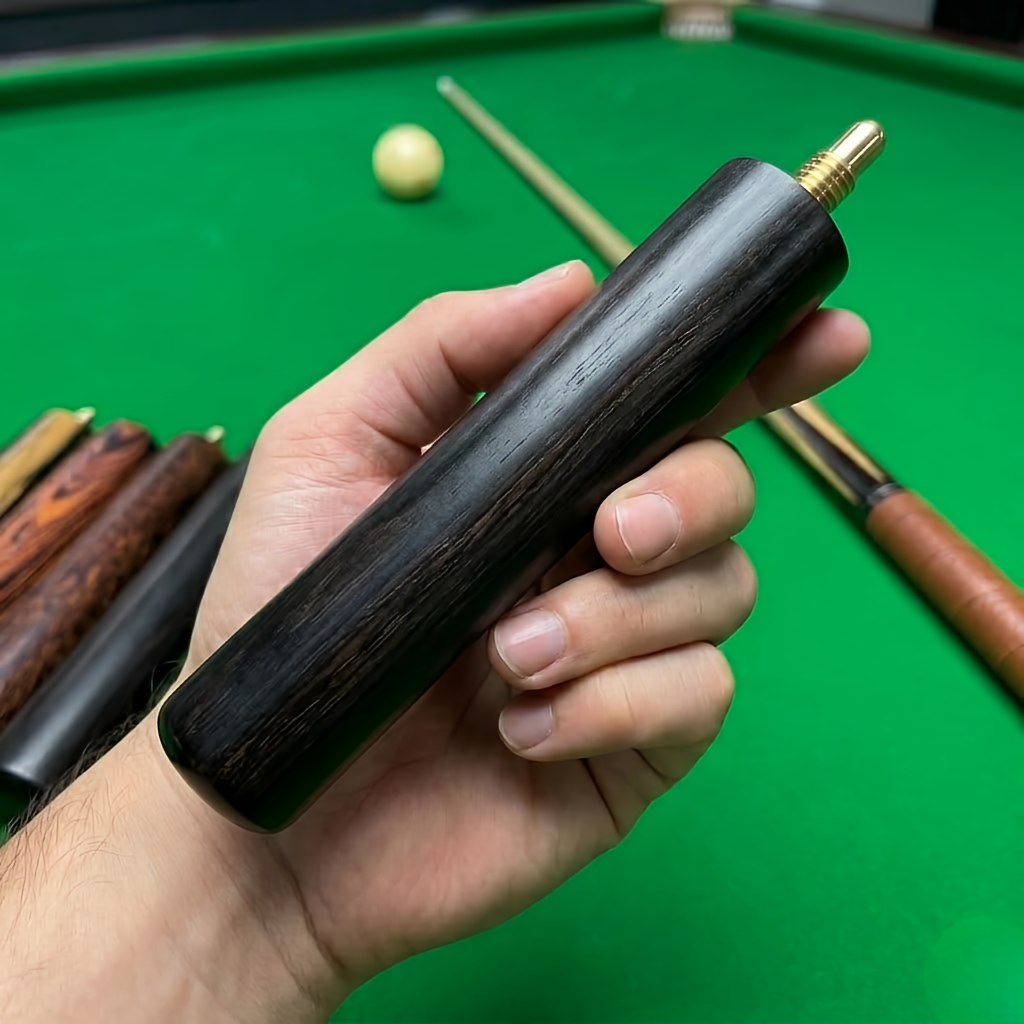
Record the cue’s product name, reference code, section format and the date of your observation. If the cue is jointed, note whether the butt is shown assembled or separated. If an extension is pictured, record whether it is included, optional or simply placed nearby. A photographed accessory is not evidence that it fits this cue; the cue-extension selection guide covers compatibility as a separate question.
Build a useful butt-end condition record
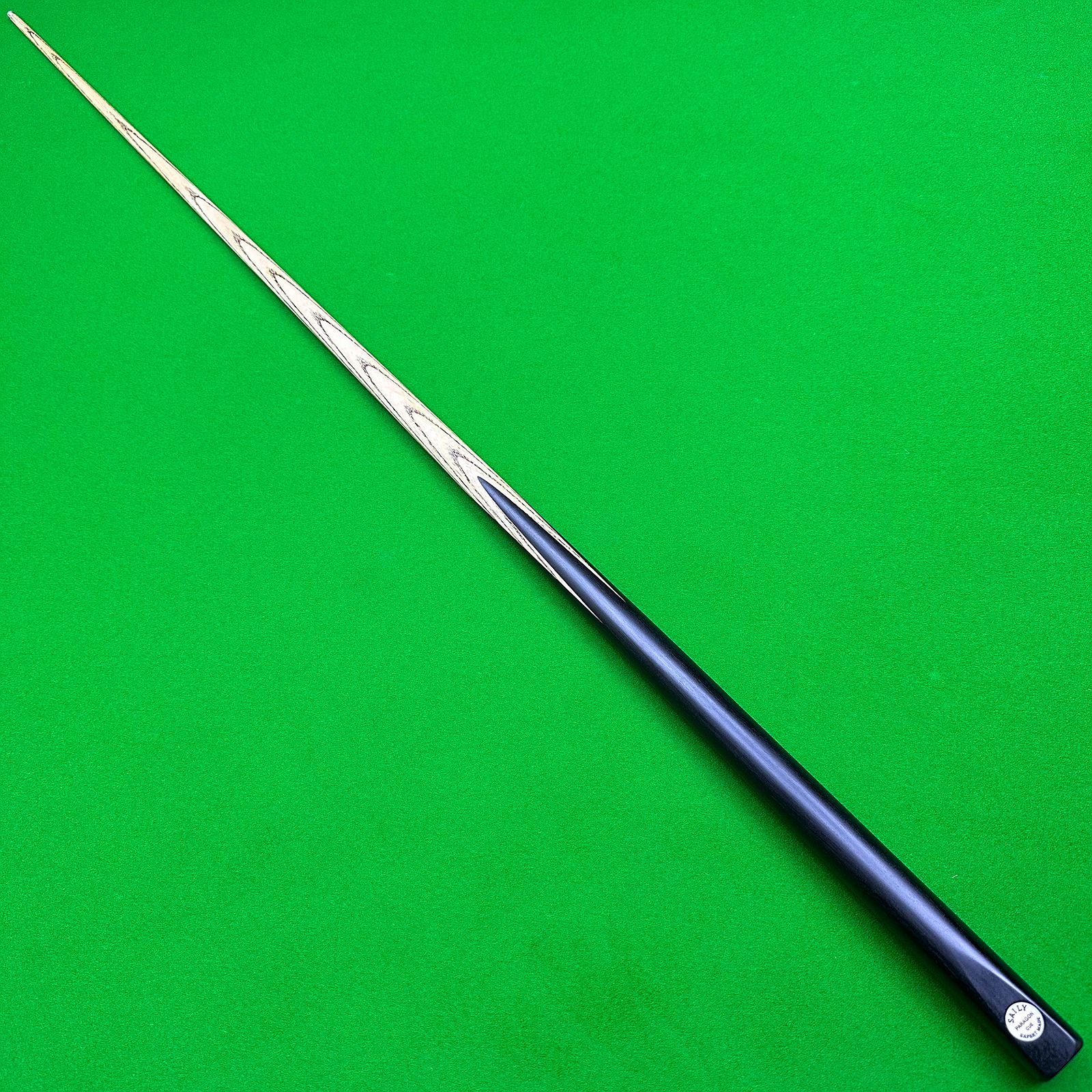
Place the cue on a clean, stable surface and use soft, even light. Take one full-length photograph and several close views: the end face straight on, the side transition into the butt sleeve, and the surrounding finish from two angles. Keep the reference code or a neutral identifying note in the same record so the photos cannot later be confused with another cue.
Write what is visible rather than what you think it means. Useful notes include “edge appears even,” “small mark at the lower rim,” “fitting does not move under a light fingertip contact,” or “a narrow line is visible but its depth is unknown.” Do not turn a photograph into a material, construction, age, value or performance claim. If the listing uses a specific term, quote it and label it as the seller’s description.
For a second-hand cue, keep the current listing, older photographs, invoice or message history together. The used snooker cue buying checklist helps separate identity, condition and transaction evidence instead of relying on one attractive close-up.
Inspect the fitting without forcing it
- Look at the perimeter.Check the boundary between the end fitting and the butt for a new opening line, uneven step or lifted edge.
- Check for visible damage.Record chips, splits, dents, missing pieces, abrasion or a mark that was not present in earlier evidence.
- Observe, do not stress-test.If the fitting visibly rocks, clicks, rattles or changes under ordinary handling, stop; do not twist it to find a limit.
- Review contact history.Note floor-impact marks, rack contact or transport pressure without claiming that one mark proves a cause.
Do not tighten a screw, add adhesive, drill, sand, polish aggressively or pry under an edge. Do not use the butt cap as a reason to bang the cue on the floor. The purpose of this check is to preserve evidence, not to turn a visual inspection into an unqualified repair.
Compare the butt end with the rest of the cue
A clean end fitting cannot certify the shaft, ferrule, joint, straightness or finish. View the cue as one exact object: compare the butt-end evidence with the product photographs, specification record and any declared repair history. A changed mark near the end may matter even when the fitting itself appears stable, while a cosmetic difference may need no conclusion until the cue is examined in person.
When buying online, request a current image rather than relying on a catalogue photograph. Ask the seller to confirm whether the visible fitting is original to the cue, whether it moves or rattles, and whether the butt has been dropped, struck or repaired. Keep return terms and shipping protection with the same notes. The cue-finish inspection guide can help you describe surrounding surface evidence without guessing its material or history.
Know when to stop and ask for assessment
Stop play and separate the cue from other equipment when you find a crack, persistent gap, loose fitting, new rattle, sharp edge, movement, impact evidence or a condition that looks different from the seller’s record. Do not keep striking “to see if it gets worse.” Preserve the photographs, date, exact configuration and what changed.
The maker, seller or an experienced cue technician can assess the actual cue and explain whether the concern is cosmetic, structural, a replaceable fitting or something else. That decision depends on inspection of the exact parts; it should not be inferred from a generic photo or solved with a household adhesive. A careful butt-cap check protects the quality of your evidence even when it cannot answer the repair question by itself.
Snooker cue butt cap FAQ
Is every snooker cue fitted with the same butt cap?
No. The butt end may have a bumper, badge, cap, plate or another fitting, and some cues have an extension connection. Identify the exact cue and documented parts instead of assuming a universal design.
Can I tighten a loose butt cap myself?
Do not remove, tighten, glue, drill or sand an end fitting as a trial. Record the movement and ask the maker, seller or an experienced cue technician to assess the exact cue.
What should I photograph when buying a cue online?
Request a current full-cue image, a straight-on butt-end image, close views of the fitting and surrounding finish, and a photograph showing the exact product identity. Ask whether the fitting moves, rattles or has prior repair history.
Does a clean butt cap prove a cue is good?
No. It is one condition checkpoint. Tip, ferrule, shaft, joint, straightness, finish, specifications and transaction evidence still need separate review.
SAILY CUE CATALOGUE
Review the exact cue record
Compare current photographs, documented specifications and condition notes before you decide whether a butt-end detail needs follow-up.